Paper, Card or Fabric for a Collage? Choose a Surface That Suits the Image
Paper, card or fabric for collage each shape a piece differently. Compare their handling, texture and adhesive needs to choose a surface that suits your image.
The common mistake with paper, card or fabric for collage is choosing whatever is already on the table, then expecting it to behave like a neutral background. It will not. Thin paper can buckle under wet paste, card holds its shape but may make a collage feel stiff, and fabric brings its own weave and movement. Choose with those traits in mind and the first decision becomes easier, not more solemn.
For a low-stakes project, treat the surface as part of the image. It affects how scraps sit, how edges look and whether the finished piece feels crisp, soft or deliberately awkward. You do not need specialist stock to begin. Drawing paper, clean packaging card and a fabric offcut each offer a different starting point.
Paper, card or fabric for collage depends on the marks you want
Paper is usually the most accommodating base for printed matter, coloured scraps or drawings. It cuts cleanly, accepts pencil and marker, and lets small pieces lie flat. Lightweight paper can wrinkle or curl when glue is applied unevenly. A heavier sheet of drawing or watercolour paper is less fussy, though it may still respond to moisture.
Card offers a firmer base. Cereal-box card, a file divider or mount board gives the work a solid edge and can support raised or layered pieces. Its stiffness can also make a collage feel like a sign or small panel. That may be right for the image; it may also make it feel more formal than intended. Thin card is easier to cut, while thick board can be awkward with ordinary scissors.
Fabric changes the terms of the work. Cotton, calico and other relatively stable woven cloths provide texture and a softer edge, while stretchy knits shift as you cut and handle them. Fabric can be folded, stitched or layered with paper, but glue may soak through or leave a visible patch. Flexibility helps if the surface should move or hang loosely. It can be a nuisance if you want precise geometric shapes.
Compare the surfaces with a small set of scraps
A short comparison is enough to notice what each material does. Use the same scraps on each base, and let the results guide your choice. The point is not to produce three finished works; it is to see how each surface affects cutting, arranging and sticking.
- Gather candidates. Set out drawing paper, clean card and a fabric offcut, along with a magazine image, solid-colour paper, a small drawing and a narrow strip of cloth. If the materials are clean and large enough for your intended pieces, keep them in the comparison; otherwise, choose suitable offcuts.
- Cut dry shapes. Use the same simple shapes on each base and notice how the scissors move, whether edges stay neat and how the material bends when lifted. If a shape distorts before glue appears, choose another base for precise cuts or adapt the design to looser edges.
- Arrange without glue. Place the same scraps on each surface and compare contrast, texture and how much background remains visible. If one base makes the image easier to read, favour it; if the composition feels crowded, remove a scrap or leave more open space.
- Attach a few pieces. Use a small amount of an adhesive suited to the materials, following its directions, and work over a spare sheet. If pieces lie flat without obvious glue marks, continue with that combination; if the base bends or adhesive shows through, try a different adhesive or surface.
- Leave each sample undisturbed. Later, look for lifted corners, glue marks, curling or changes in the fabric’s shape. If these interfere with the image, change the adhesive or base; if they suit the intended look, keep them as part of the design.
- Add one layer. Put a small scrap over an existing piece on each sample. If the extra layer improves the image without making the base awkward to handle, keep layering; if it adds unwanted weight or stiffness, stop or switch to a firmer base.
- Choose by purpose. Compare the samples with the intended way of displaying or handling the work. If one base supports that purpose and the desired mood, choose it; otherwise, keep the samples and revise the design before committing.
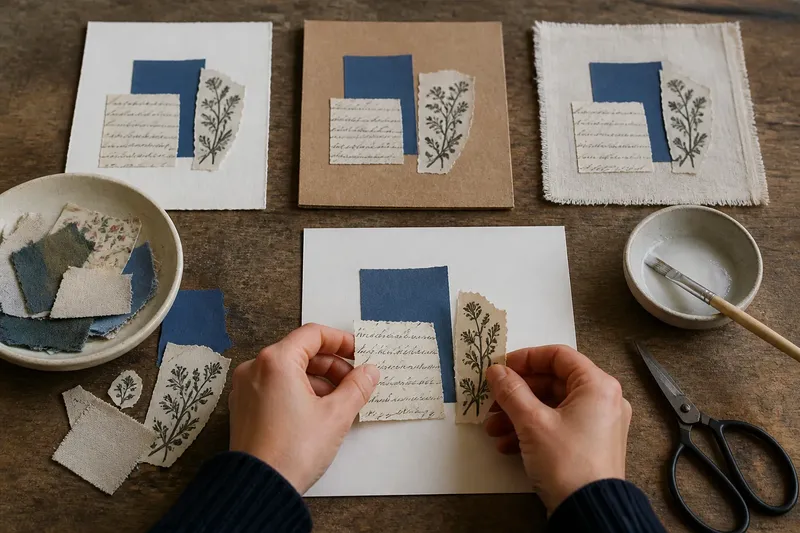
Say you want to make a small collage from a handwritten note, a block of blue paper and a torn plant image. You have a sheet of drawing paper, a piece of packaging card and a stable cotton scrap. First, arrange the three pieces on each base without glue: the note and torn image read clearly on the drawing paper, while the packaging card makes the composition feel more like a panel. Next, attach a small piece of each scrap to an offcut of the relevant base with an adhesive suited to the materials. If the note stays legible and the paper remains flat, the drawing paper is the useful choice for a quiet, paper-led image; if the work needs to stand upright, the card is the better trade-off. The cotton can contribute texture, but the note needs a paper backing if its handwriting must remain clear.
Choose a surface that suits the way you work
Feel is not a decorative extra. It changes the pace of making. Paper is easy to stack, trim and reposition. It suits delicate overlaps and small details, especially with sharp scissors and a cutting mat for straight edges. Tissue or newsprint can be beautiful, but it tears readily and may show adhesive underneath. Keep it for broad, light layers unless fragility is part of the effect.
Card invites a more deliberate arrangement because it resists bending. It suits a collage that will be propped up, displayed on a shelf or handled often. Coloured card can also provide a strong field of colour without a covering layer. Watch the cut edges: corrugation and exposed inner layers may look accidental unless they are part of the design.
Fabric is forgiving in a different way. Its surface can soften abrupt joins, and a fringe or seam can carry visual interest. But woven cloth has direction, thickness and texture. Fine cotton behaves differently from felt or denim, so a small offcut is a better guide than the broad label “fabric”. If you combine cloth with paper, decide whether the contrast is intentional. A crisp printed rectangle against a rough weave can be lively; several unrelated textures may compete.
Match adhesive and finish to the base
Adhesive is part of the surface choice because it changes handling and appearance. A glue stick suits many dry paper pieces, while brush-applied paper adhesive can spread more evenly across larger areas. Some glues make thin paper ripple, and wet adhesive may leave fabric stiff or stained. Use materials intended for the combination you have chosen, and try them on an offcut if the visible finish matters.
Apply adhesive in a controlled layer to the piece or the base rather than flooding both. Put baking paper or a clean sheet beneath the work to protect the table. Smooth from the centre towards the edges with a clean piece of card or a soft cloth, taking care not to stretch fabric or tear delicate paper. If a corner lifts, add a little adhesive beneath it instead of coating the entire work again.
Finishing is optional. A collage made for a folder or pinboard may need nothing beyond a dry, flat place to rest. A mounted piece might suit a backing sheet, but the backing should not obscure the edges or flatten a fabric effect you wanted to keep. Avoid adding a glossy coating simply because the work looks unfinished; gloss can alter colours and textures, and it is difficult to remove once dry.
Not worth the effort: buying specialist surfaces before you know what you like. A few clean offcuts and an adhesive suited to the materials are enough for a useful comparison. The perfect sheet matters less than noticing whether you want the next cut to be crisp, soft-edged or slightly unruly.
Which surface should you use for a collage?
Is paper the easiest surface for a first collage?
Paper is often the simplest place to begin because it cuts cleanly and accepts drawing as well as pasted pieces. Choose a sturdier sheet if you expect to use wet adhesive or several layers.
Does card make a better collage base than paper?
Card is useful when you want a firm panel that holds its shape, while paper is easier to cut and handle. The better choice depends on whether the finished work should feel supported or flexible.
Can fabric be used in a paper collage?
Yes. Fabric can add weave, softness and an irregular edge to a paper-based collage. Try a small offcut first, since some cloth stretches or absorbs adhesive in ways that change its appearance.
How do you stop collage paper from wrinkling?
Use a sturdier base, apply adhesive sparingly and smooth each piece gently from the centre outwards. Moisture-sensitive paper can still buckle, so choose another base if a very flat finish matters.
Let the chosen surface set the scale
Once you have chosen paper, card or fabric for collage, let its handling suggest the scale of the work. Fine paper details suit a surface that stays flat; broad shapes are easier on cloth that shifts under small cuts; card can carry a compact arrangement without a frame. Begin with an image small enough to finish in one sitting, then leave room for the surface to contribute its own character. A collage need not conceal what it is made from.